Home › Rediscover Sudoku
Rediscover Sudoku — when it has got too easy
You can fall in love with the same game all over again. When Sudoku gets boring, the game is rarely to blame — it is that you have been working with the same two or three moves for years: hunt for singles, keep pencil marks, count through the rows. That carries you as far as “Hard” — after that every further puzzle is a repeat of the last one.
What changes it is a bigger toolbox: learn a technique, practise it in the trainer until it sticks, then order yourself a puzzle in which exactly that technique is guaranteed to turn up. The same Sudoku, new all over again.
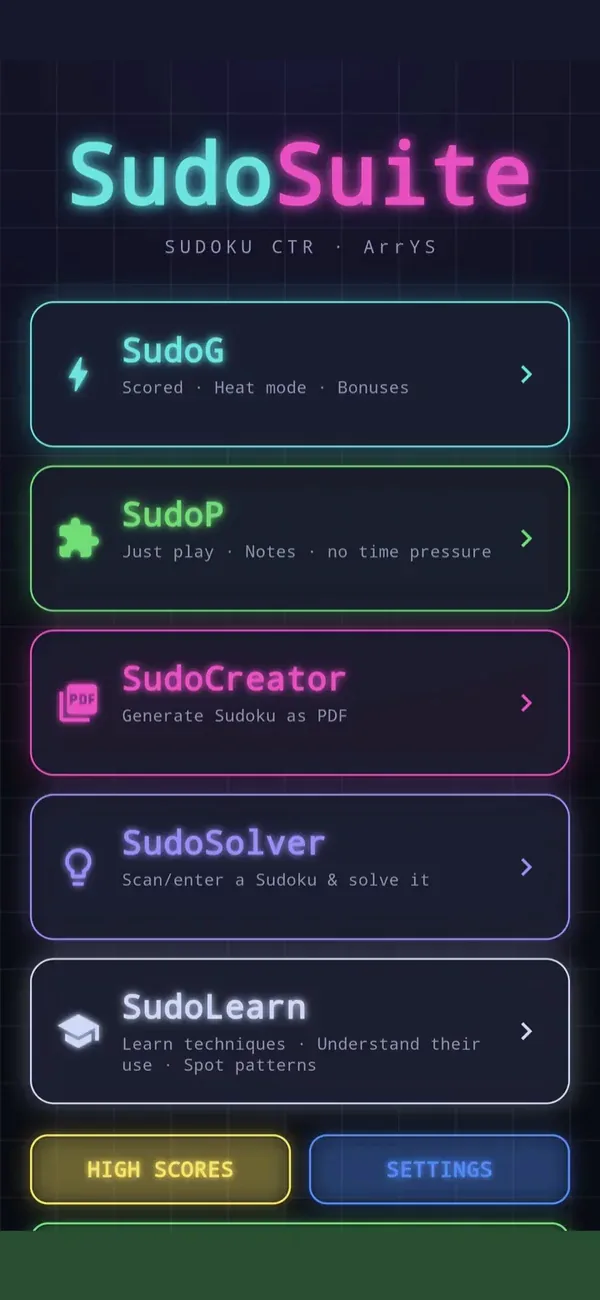
- 36 course chapters
- Trainer checks your reasoning
- Puzzles by technique (Pro)
- Ten difficulties
- Plays offline
Why Sudoku becomes too easy at some point
Most people learn Sudoku by trial and error and then stick with whatever came out of it: obvious cells first, then pencil marks, then patience. That solves a very large share of all published puzzles — and that is exactly the problem. It works, so you never go looking for anything new.
But the pull of Sudoku never came from the filling in, it came from the moment of recognition: that brief instant when numbers suddenly turn into a pattern. If you only ever know the same patterns, that moment comes round less and less. Harder puzzles then help only so far: they take longer, but they do not feel any different, because you tackle them with the same tools.
What really changes something is a new pattern in your head. Your first X-Wing does the same thing your first Hidden Single once did — the grid looks different afterwards.
The three steps: learn, practise, order
Plenty of places explain techniques. Few let you practise them. And nowhere else will you be handed a puzzle in which the technique you have just learned really does turn up. In SudoSuite these three steps mesh together — that is the real core of the app.
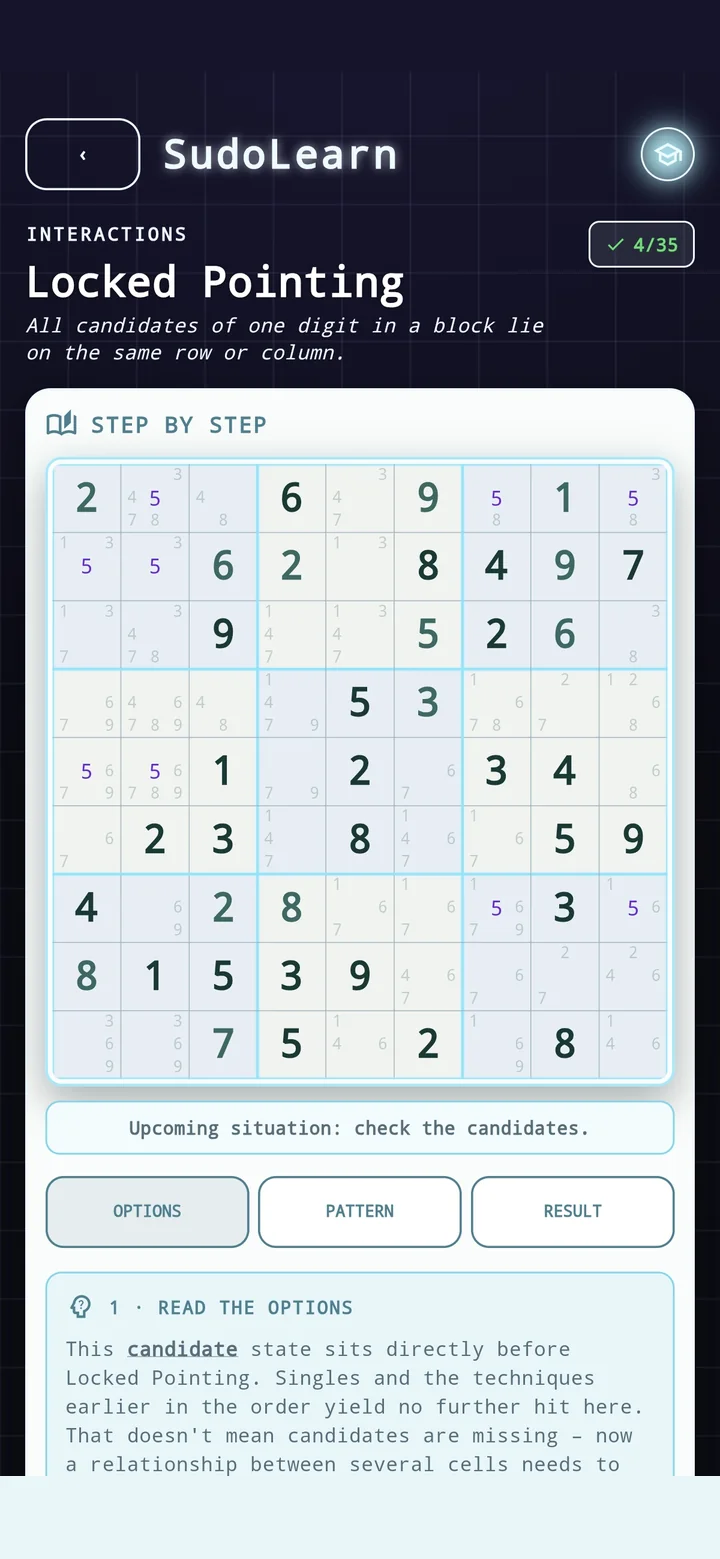
1. Learn the technique — SudoLearn with 36 chapters
The course runs from the Naked Single through Locked Candidates and the X-Wing all the way to chains. Every chapter works on a real grid: first read the candidates, then spot the pattern, then draw the conclusion. Colours separate true nodes, false nodes, eliminations and placements — the same language the Marks later speak in the game. Every chapter also names the playing level from which the technique is needed, so you do not have to guess the order.
2. Practise in the trainer that checks your reasoning
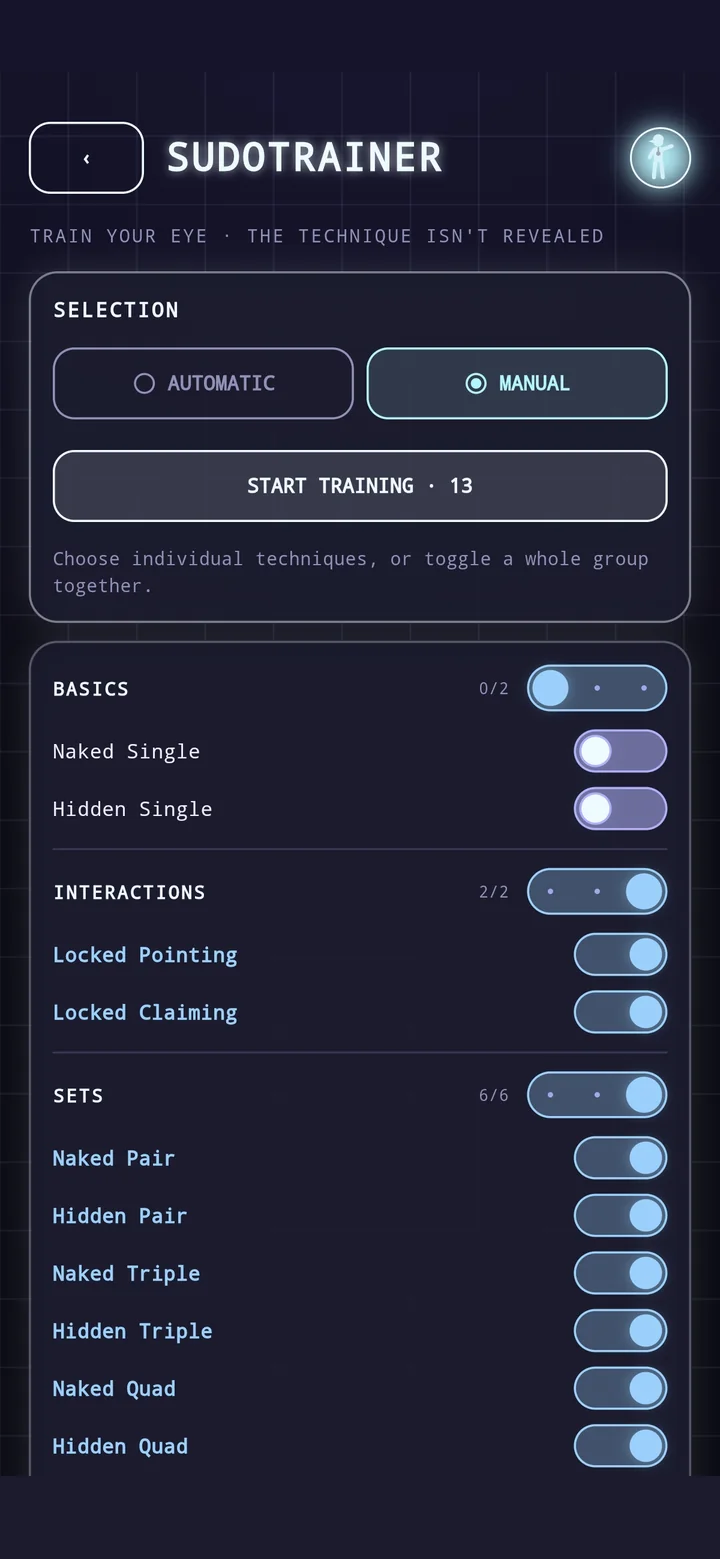
Having read what a Swordfish looks like is not the same as finding one in the grid. So SudoTrainer sets up situations without giving the technique away — spotting it is your job. And it does not only check the number you enter, it checks the way you got there: the trainer says which technique it recognised, and it accepts another valid route as well. You can be tested on everything you have learned so far, or on techniques you pick by hand.
3. Order the matching puzzle — SudoSelect
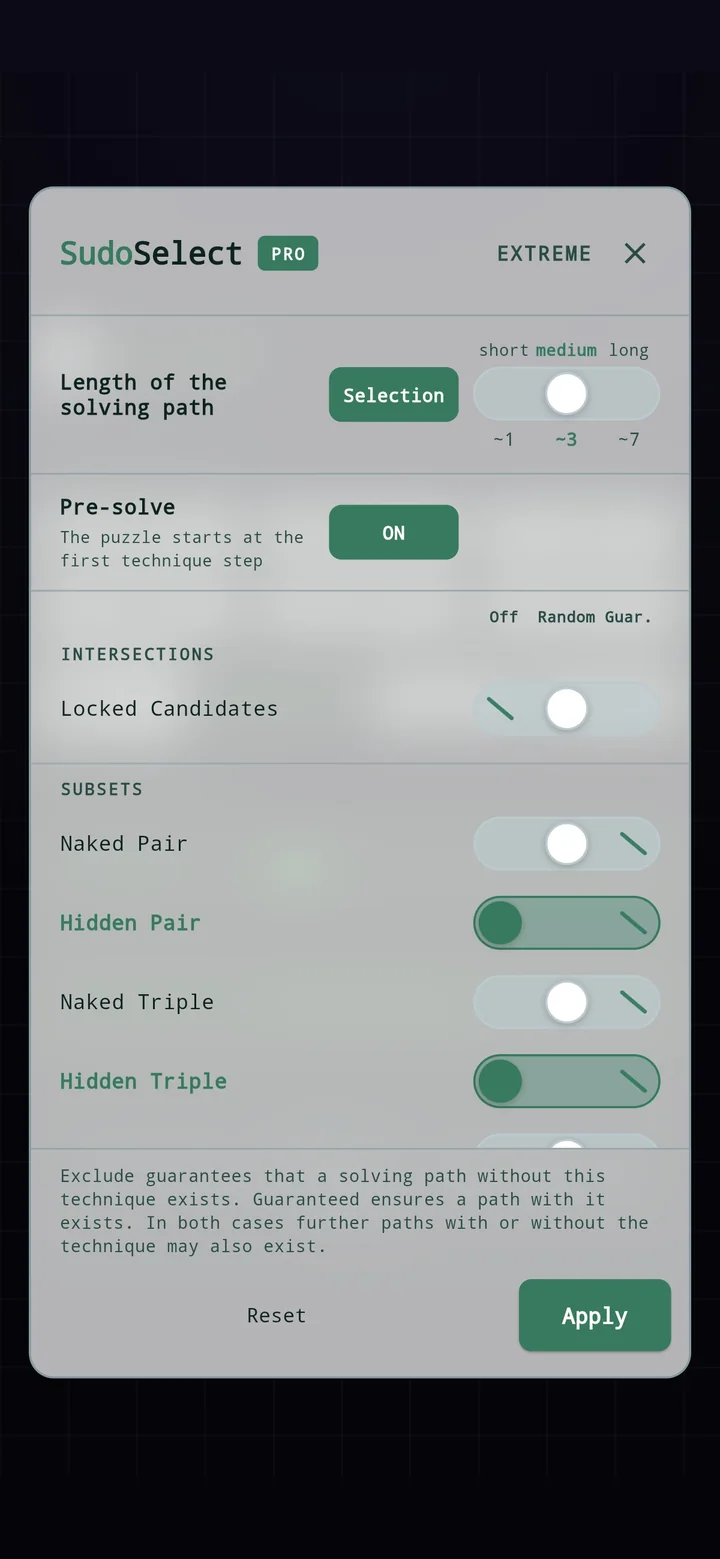
This is where the loop closes. With SudoSelect a puzzle is not rolled at random, it is ordered: ask for techniques or rule them out, at random or guaranteed, plus the length of the solving path and a pre-solve of the dull opening moves. Just learned the X-Wing? Then play a puzzle that is sure to contain an X-Wing — instead of solving twenty puzzles and hoping. SudoSelect is part of Pro; the course and the trainer are in the free version.
What that changes about the game
With newly learned techniques you solve many Sudokus with a whole new elegance — and some of them for the first time ever. Puzzles where you used to give up at some point or start guessing now have a clean route. And puzzles you would have managed anyway suddenly fall in a few clear steps.
Rediscovering it like this is as much fun as the very first time was. It is the same reason you started years ago — only with more behind it.
If it is the difficulty that is the problem
Sometimes what is missing is not the technique but simply something to push against. SudoSuite has ten difficulties from Starter to Titan. From Very hard upwards the techniques come into play; at Ultra several technique steps stand in your way; and every Titan is guaranteed to hold at least one real chain. What the individual levels ask for is on the page Hard Sudoku.
How to start
- Pick a technique that sits just above what you can already do — the course names the matching playing level for every chapter.
- Work through the chapter and really do the exercise in it, rather than just reading the explanation.
- Get tested in the trainer until the pattern jumps out at you without searching. One situation, then the next — three minutes are enough for that.
- Play a puzzle with it, in SudoP without a clock or in SudoG timed and scored.
- Then the next technique. 36 chapters last a good long while.
Start again from the beginning
36 chapters, the trainer and all ten levels are waiting — free, no account, plays offline. Ordering puzzles by technique comes with Pro, a single $5.49 and no subscription.
Or try SudoP online right here:
NowPlay Sudoku onlineno sign-up, no waitingCommon questions
Sudoku has got boring — what helps?
A new technique, not a new app. If you have worked with singles and pencil marks for years you solve almost everything, but you are hardly ever surprised any more. A new pattern in your head changes your grid at once — and with SudoSelect you can then order a puzzle that contains exactly that pattern.
Sudoku has got too easy — which level next?
From Very hard upwards the techniques come into play; at Ultra several technique steps stand in your way; and every Titan holds at least one chain. The first time you get stuck there, what you need is not more patience but a named technique.
Can I play Sudoku with one particular technique on purpose?
Yes. With SudoSelect you ask for techniques or rule them out, at random or guaranteed, and you also set the length of the solving path and the pre-solve. SudoSelect is part of Pro.
Which Sudoku technique should I learn next?
The order in the course runs from the singles through subsets and Locked Candidates to the X-Wing, the Swordfish and the chains. Each of the 36 chapters names its learning difficulty and the playing level from which you need the technique.
Does the technique course cost anything?
No. SudoLearn with all its chapters, the exercises and the trainer is part of the free version. Only ordering puzzles by technique belongs to Pro.
Does learning techniques take the pull out of Sudoku?
Experience says the opposite. A technique does not replace the thinking, it moves it: instead of counting through cells, you look for patterns. And that moment of recognition, the thing that makes the game, comes round more often again.